
How to stand out as a WordPress developer
A month has already passed since WordCamp Asia 2026, and one thing from the event still stays in my mind.
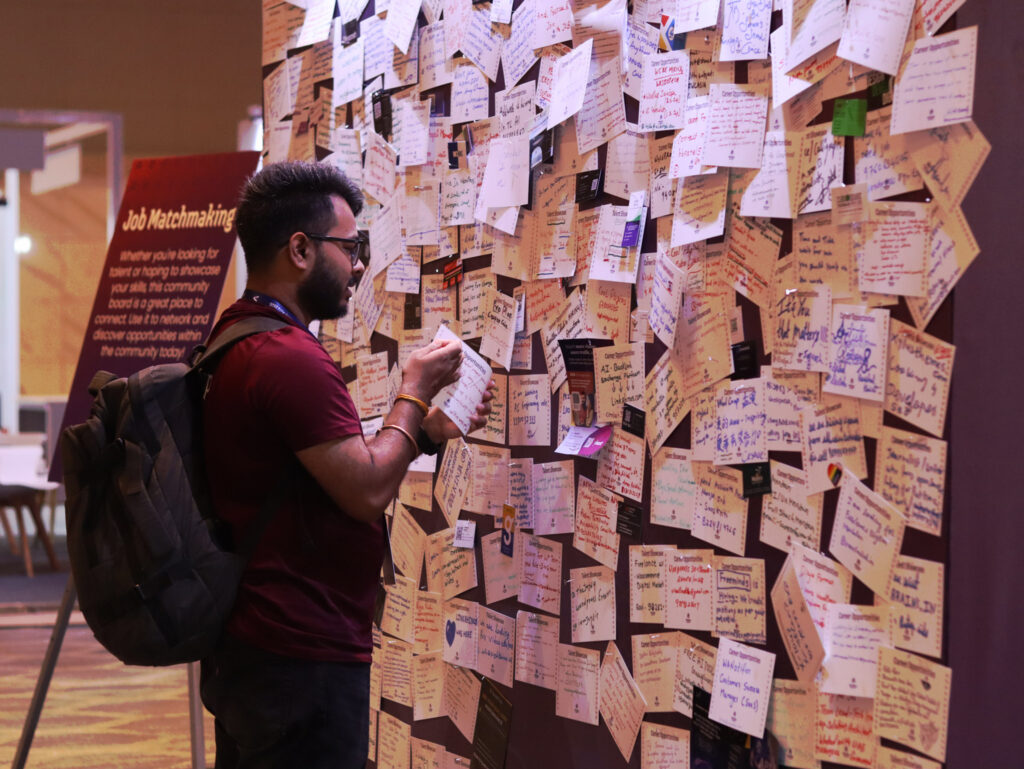
For some reason, several people approached me asking about job opportunities, while nearby we had a job board and there were contacts of HRs and other offers. I am not sure how successful the board itself was, but I think the attempt was important. And I was glad those opportunities existed. The market is difficult right now, and many competent people are struggling to find work. Ironically, experienced people are often more reserved and doubtful than people who just learned something and are already trying to conquer the world.
And it is becoming increasingly difficult to understand who actually has experience, deep knowledge, and passion — and who simply knows how to present themselves well.
You may think development is one field where you cannot talk your way through without actual abilities. Usually that is true. But sometimes there is nobody senior enough to evaluate what the applicant is saying. Sometimes there simply is not enough time. Some people rely on this.
Several years ago, I participated in technical interviews for my own replacement. Before the interviews, I reviewed the candidates’ CVs and honestly felt intimidated. Their backgrounds looked impressive — much stronger than mine on paper.
Then the interviews started.
The first candidate answered only a few very basic questions correctly. The second failed all technical questions entirely, even the one about WordPress hooks. He repeated a memorized answer from a popular WordPress interview questions site but could not explain what it actually meant. What was written in their CVs and what they actually knew did not match at all.
Today this problem is becoming even bigger. AI can generate polished CVs, portfolios, cover letters, and GitHub descriptions in minutes. A truthful CV can easily look weaker than an exaggerated one.
So how do you stand out in this environment if you actually know your craft?
I do not think there is one magical solution, but there are several things that still matter.
Love what you do
One thing is very difficult to fake for a long time: genuine interest.
People who truly worked on projects usually remember them vividly and even on an interview can describe with deep details what they are especially proud of, what didn’t work out and why, what the complications and challenges were, and how they collaborated with other people and teams. They can describe what patterns they used and why, architectural solutions, UX considerations, aspects of third party integrations, compatibility issues. And if you ask follow-up questions, even more details appear naturally.
Interviews are stressful. I failed an interview myself and still remember the mistake I made. Technical interviews are not easy, especially live coding. But there is a big difference between nervousness and not understanding your own work.
If you genuinely enjoy what you are doing, learning in depth is not a problem and sharing knowledge is also a pleasure, even in a job interview. I spoke about how to love what you are doing in my WordCamp Asia 2025 talk on developer growth.
And there are many more ways to express love to what you are doing that can work in your favor.
Play to your strengths
Many developers, including me, try to present themselves as people who can do absolutely everything: frontend, backend, DevOps, AI, design, marketing, infrastructure, management. And WordPress developers just have to do this all to some degree, the market expects us to, but we cannot do everything equally great and don’t need to delude ourselves or others.
If you try to do everything, people rarely remember you for anything specific. It can sound rough but as any product at the market, we need to have a unique selling proposition, the strongest point we will be remembered for. It can be performance optimization, enterprise WordPress, WooCommerce, Gutenberg blocks, accessibility, plugin architecture, security, migrations or headless WordPress, but it can go much deeper. I limit what I do purely to custom solutions, possibly it isn’t as detailed as could have been, but I am still working on it. It limits the kinds of projects I accept, but it also helps me evaluate what I am ready to commit to — no three-day projects, no vendor themes, no rushed redesigns or “quick optimization” jobs.
Having a recognizable direction makes it easier for people to understand where you fit and when you don’t, saving time for everyone.
It doesn’t mean that you can not know other areas, usually business benefits if you know things in connected areas — this way you can communicate with different specialists more easily and even jump to the rescue when needed.
Additional knowledge should work to support your strong area of competence and don’t turn you to Jack of all trades. In each area we have almost bottomless depth and constant changes, so trying to catch up with everything at once is impossible and can turn into a nightmare.
Proof is more valuable than claims
The biggest problem with modern hiring is that text is easy to fake. Real long-term work is much harder to fake. That is why public proof matters:
- GitHub repositories,
- plugins,
- contributions,
- technical articles,
- conference talks,
- open-source participation,
- meaningful pet projects.
Of course, there are complications.
Most commercial work happens inside private repositories protected by NDAs. Many developers spend years building excellent systems (or honorably battling with legacy code) they cannot publicly show.
This is why pet projects and contributions matter, even if they are smaller than commercial work.
At the same time, quality matters more than quantity.
Some people present tasks made on IT-courses as pet projects. There is nothing wrong with learning through courses. The problem appears when tutorial tasks are presented as personal projects or long-term practical experience. Passionate people will have pet projects of their own, even if they may not be as good as commercial projects, but done with heart that will be clearly visible.
Others chase contribution badges without making meaningful contributions. Sometimes people try to collect as many technologies and labels as possible to appear impressive. But shallow activity rarely creates real professional trust. One thoughtful long-term contribution is more valuable than dozens of superficial ones.
Open-source can help — if you treat it seriously
For WordPress developers, contributing to the ecosystem can genuinely help.
Plugins, themes, documentation, testing, performance work, accessibility improvements, translations, Core contributions — all of these can become public proof of experience and build the experience itself.
But open-source should not be approached only as a way to decorate a CV.
Publishing a plugin, for example, is not a one-time action. Users appear. Support requests appear. Bugs appear. Security issues appear. Maintenance takes time and responsibility.
Some developers underestimate this completely. Others overengineer simple plugins into giant showcases of every possible pattern and abstraction.
Neither extreme is ideal.
Good open-source work is sustainable work.
And over time, consistent thoughtful contribution builds something even more valuable than a badge: reputation.
Communication matters
Development is the wonderland where you can do everything alone from the idea to “going live”. This is true in theory, and I personally love this, but even with a pet project there is usually some collaboration, and with a paid job technical skills alone are far from enough.
There are customers, stakeholders, managers, designers, QA-specialists, DevOps, end-users, third party services and much more, and effective collaboration can be a difference between project success and failure. One good question “Why?” can save months of wasted work.
The easiest mistake to make is to assume that everyone knows what you know and it is obvious. You, your colleagues, managers and clients — everyone thinks about something at some point: “it is obvious and doesn’t worth explaining” that can lead to a huge issue later. This is why knowledge in related areas can help immensely, not to do the work, but to understand others specialists and their point of view, but you cannot truly step into someone else’s shoes, so communication is still necessary to succeed, no matter how technically skilled you are.
Before any line of code and much more in between we usually:
- communicating to make optimal decisions,
- discussing architectural solutions and tradeoffs,
- explaining decisions and potential points of failure,
- documenting solutions for colleagues and users,
- working with feedback and unexpected circumstances.
A technically strong developer who cannot communicate clearly may struggle more than an average developer who works well with people. Remote work also limits communication, which makes clarity even more valuable.
Be visible
Networking is uncomfortable for many developers, but visibility matters.
That does not mean sending random sales pitches or messaging strangers with “we do everything” offers. Honestly, those DMs are exhausting.
It means participating where your professional audience already exists from LinkedIn to conferences and communities in a way that is appropriate to the place.
Many opportunities happen because people already know roughly who you are and what kind of work you do.
One recommendation can change a career path completely. I experienced this myself when I was recommended to a large company through my local WordPress community.
And for students or junior developers, internships are still one of the best entry points. A good internship provides something extremely important: real production experience, real teamwork, and real responsibility. Not having this after graduation can be a sign for a potential employer that you are not deeply interested in what you studied and will be unmotivated as an employee. Sometimes one summer internship can influence your entire career path far more than another few months of passive waiting.
The market is difficult — but genuine work still matters
The market is changing quickly, and simple development work is becoming increasingly automated.
But understanding systems deeply, solving unusual problems, communicating clearly, making thoughtful decisions, and taking responsibility for long-term results still matter.
Tools change. Technologies change. The need for thoughtful people who genuinely care does not.
Chasing a job is hard. It is very tempting to grasp the first offer you receive, only to regret the decision almost immediately and force yourself to work at something that feels like punishment. That is not sustainable.
And if you are a developer who is genuinely interested in the craft, you will most likely have options eventually — even if it requires patience, active searching, continuous learning, and some faith in yourself.
There are also completely different paths developers can take today — freelancing, agencies, consulting, building products, creating startups, or developing independent projects. That is probably a separate conversation entirely.
What do you think actually helps developers stand out today?
Discussion
No comments yet.